
Blog Details
26 Mar, 2026 | By Sm@rtnode-A1min
Why Architects and Interior Designers Are Specifying Touchscreen Boards in Every Modern Build
There is a noticeable shift happening inside design studios across India.
Architects and interior designers are no longer debating whether to include automation. Instead, they are deciding how seamlessly it can be integrated into the space itself.
At the center of this shift is one device: the modern touchscreen board for the home.
The Design Problem No One Talks About
Walk into a well-designed home built a few years ago, and you will often find one visual inconsistency, the switchboard.
Despite carefully selected materials and lighting, traditional switches interrupt the aesthetic flow. Multiple panels, mismatched finishes, and scattered controls dilute the overall experience.
This is where modern home automation solutions begin to change the narrative.
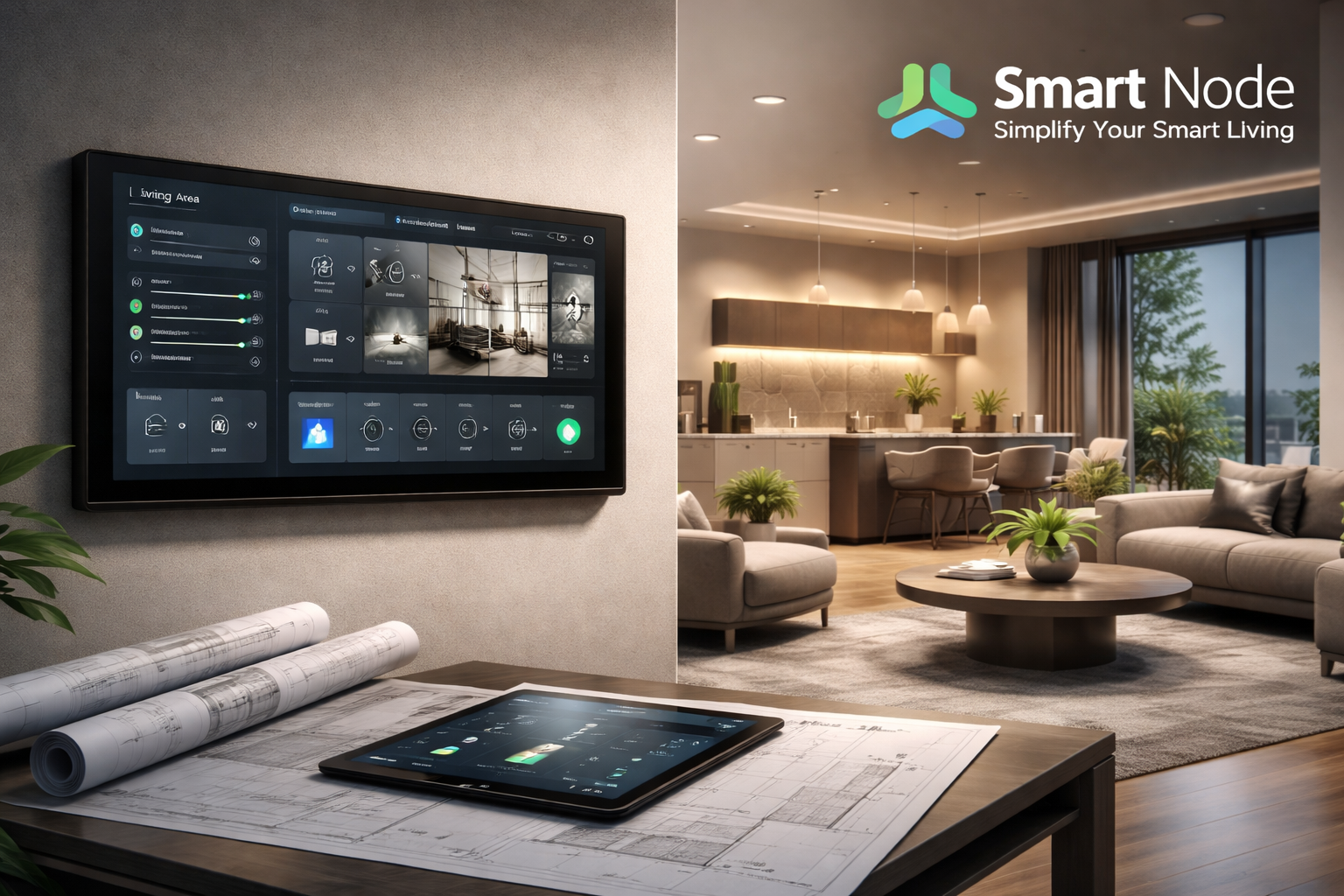
A single touchscreen board for the home replaces multiple switches with a clean, unified interface. It sits flush with the wall, blending into the design instead of competing with it.
For designers, this is not just a technological upgrade. it is a visual correction.
Why Designers Are Making the Shift Early
The biggest change in 2026 is not adoption, it is timing.
Architects are specifying smart home systems at the design stage, not during execution. This early integration allows for better planning, cleaner installations, and a more cohesive outcome.
Three clear advantages are driving this decision:
1. Design Consistency
A well-integrated touchscreen board for the home becomes part of the wall finish. It aligns with materials, proportions, and layout, rather than appearing as an afterthought.
2. Long-Term Relevance
Homes designed today are expected to remain relevant for years. With evolving technology, home automation solutions ensure that spaces stay adaptable without major structural changes later.
3. Premium Positioning
In high-end residential projects, a refined smart home system signals quality and forward-thinking design. It has become a subtle but powerful differentiator.
What a Modern Touchscreen Board Actually Does
To many homeowners, the concept still feels like an advanced switch. In reality, it is far more.
A touchscreen board for the home acts as the central interface for controlling multiple elements within a space.
From a single panel, users can:
- Adjust lighting levels and ambiance
- Control fans and air conditioning
- Manage curtains and blinds
- Activate preset scenes for different moods
These capabilities are enabled by integrated home automation solutions that connect devices into a cohesive system.
The result is not complexity – but simplicity.
The Interior Designer’s Perspective
For an interior designer, every element must serve both form and function.
A well-designed smart home system meets strict aesthetic and usability expectations:
- It must sit flush with the wall
- It should have a minimal, readable interface
- It must respond instantly and reliably
A thoughtfully designed touchscreen board for the home achieves all three.
It becomes a surface clean, intuitive, and unobtrusive, while still delivering powerful control in the background.
Room-by-Room Integration
One of the strengths of modern home automation solutions is their adaptability across different spaces.
Living Room
A central touchscreen board for the home manages lighting scenes, entertainment settings, and overall ambiance.
Bedroom
Integrated into the bedside, the smart home system simplifies daily routines from waking up to winding down.
Kitchen
Quick access to lighting and essential controls ensures efficiency without clutter.
Home Office
Focused lighting and environment settings enhance productivity through simple, preset configurations.
Each space benefits differently, but the experience remains consistent.
The Real Impact: Everyday Living
What stands out after installation is not the technology—it is the absence of friction.
Homeowners no longer look for remotes.
They no longer move between switches.
They no longer think about control.
A well-executed smart home system removes these small inefficiencies from daily life.
And through integrated home automation solutions, everything works together quietly and reliably.
The Smart Node Approach
At Smart Node, the goal is not to add more technology to homes.
It is to simplify how homes function.
Each touchscreen board for the home is designed to integrate seamlessly into the overall smart home system, supported by scalable and reliable home automation solutions.
The focus remains consistent:
- Clean design
- Effortless control
- Long-term reliability
The Bottom Line
The rise of the touchscreen board for the home reflects a larger shift in how homes are being designed.
Automation is no longer separate from design, it is part of it.
Architects and interior designers are leading this change by integrating smart home systems early and leveraging home automation solutions to create spaces that are not just beautiful, but intelligent.
And in 2026, that is no longer optional. It is expected.
Related Blogs
27 Mar, 2026
Blog
Sm@rtnode-A1min Smart Door Lock System vs Traditional Locks
Have you ever left home and wondered, "Did I lock the door?" This…
27 Mar, 2026
Blog
Sm@rtnode-A1min The Most Impactful Home Automation Devices & Solutions Indian Homeowners Are Installing in 2026
India’s homes are evolving. Not slowly, but decisively. In 2026, homeowners are moving…
27 Mar, 2026
Blog
Sm@rtnode-A1min How Smart Office Automation Solutions Are Redefining Productivity and Cost Efficiency in 2026
The modern Indian office has changed. Quietly, but completely. In 2026, businesses are…