Published on 15 Oct, 2026 | Updated on 13 Oct, 2026 | By SmartNode ⏱️ 9 min read
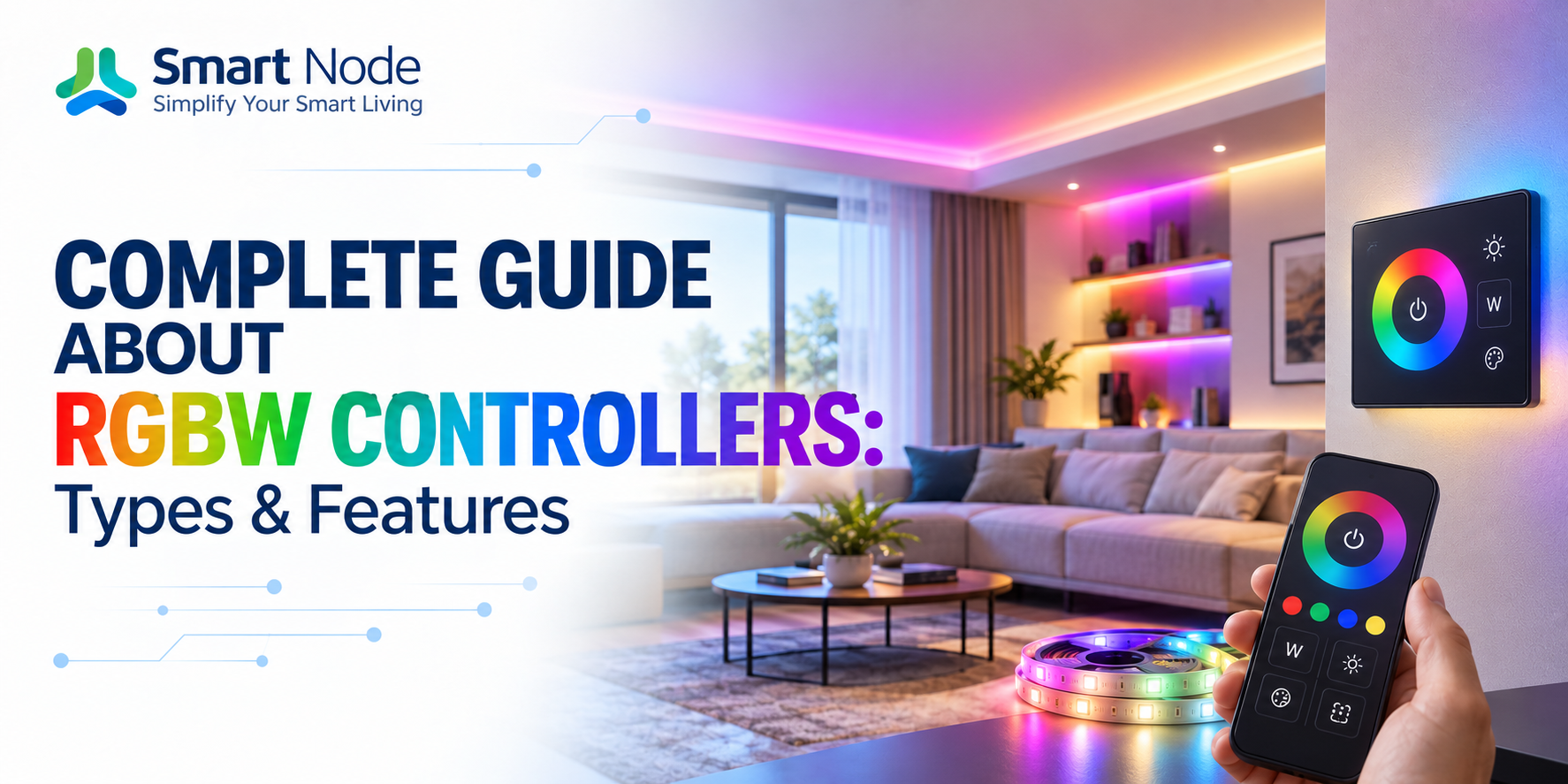
Complete Guide About RGBW Controllers: Types & Features
Colour-changing lighting can completely alter the character of a space.
The same room can feel calm with soft white illumination, energetic with colour, or dramatic with a carefully selected accent. But getting that result consistently requires more than simply installing an LED strip.
The controller is what tells the lighting what to do.
An RGBW controller manages RGBW lighting by controlling four separate channels: red, green, blue and white. That additional white channel is what makes RGBW different from conventional RGB lighting.
For homes, hospitality spaces, entertainment areas and architectural lighting, this gives designers and users more flexibility than colour-only lighting.
This guide explains how RGBW controllers work, how they differ from RGB controllers, the different types available and what to consider before choosing one.
What Is an RGBW Controller?
An RGBW controller is a control device used to operate compatible RGBW LED lighting.
RGB stands for:
- R – Red
- G – Green
- B – Blue
The W stands for white.
By adjusting the output of these four channels, the controller can create different colours as well as control white illumination where supported by the connected lighting.
That distinction is important.
A conventional RGB light controller works with three colour channels. RGBW adds a dedicated white channel instead of relying entirely on combinations of red, green and blue to produce a lighter-looking output.
This can make RGBW particularly useful when the same lighting installation needs to perform two different jobs: create coloured effects and provide practical white illumination.
For example, a living room could use warm white lighting during normal evenings and switch to a colour scene while entertaining guests.
The physical LED strip or fixture provides the light.
The controller determines how those channels behave.
RGB vs. RGBW: What’s the Difference?
The difference comes down to the number of independently controlled channels.
An RGB setup has three channels – red, green and blue.
An RGBW setup adds a dedicated white channel.
With RGB lighting, white can be approximated by combining the three colour channels. The result can work well for decorative applications, but it isn’t the same as having a dedicated white LED channel.
RGBW separates those functions.
You can use the RGB channels for colour and the white channel for dedicated white illumination.
This makes an RGBW system more versatile when lighting needs to serve both decorative and functional purposes.
How Does an RGBW Controller Work?
An RGBW controller sits between the control system and the RGBW light.
When a user selects a colour or brightness level, the controller determines the required output for each channel.
For example, selecting a blue scene increases the blue channel while reducing the others.
Selecting white illumination activates the dedicated white channel.
A more complex scene can combine the channels at different levels to create a particular visual effect.
The command can come from different interfaces depending on the system.
A physical control interface may provide direct operation.
A mobile application can provide remote control and scene selection.
A wider home automation system can trigger the RGBW controller as part of a predefined scene.
The controller is therefore the part that translates the desired lighting behaviour into electrical output for the connected RGBW fixture.
Types of RGBW Controllers
RGBW controllers aren’t all designed for the same type of installation.
Standalone RGBW Controllers
A standalone controller is primarily focused on operating the connected RGBW lighting.
This can work well when the requirement is limited to colour and brightness control without extensive home automation integration.
The controller can be operated through its supported interface, depending on the model.
Smart RGBW Controllers
A smart RGBW controller can become part of a wider connected environment.
Instead of controlling the lighting only through a dedicated controller, users may be able to operate it through an application or integrate it with other automation functions.
This makes it possible to create lighting scenes that involve more than colour.
For example, a scene could combine RGBW lighting with curtains, other lighting circuits or entertainment equipment.
Integrated Automation Controllers
In larger automation projects, RGBW control can sit within a broader automation architecture.
The RGBW lighting becomes another controllable element alongside conventional lighting, curtains, climate control and other connected systems.
This is useful when the objective is to make the lighting respond to the way the room is being used rather than treating it as an isolated decorative feature.
RGB LED Light Controller: Where Is It Used?
An RGB LED light controller is useful wherever RGB or RGBW LED lighting needs more control than simple power switching.
Common applications include:
Cove Lighting
RGBW LED strips can be installed in ceiling recesses or architectural coves to create indirect illumination.
Entertainment Areas
Media rooms, lounges and gaming areas can use colour scenes to change the atmosphere depending on the activity.
Bedrooms
Subtle colour or low-level white lighting can create different environments without relying on multiple conventional fixtures.
Hospitality and Commercial Spaces
Restaurants, hotels, lounges and retail environments can use controlled colour lighting to support different moods, events or areas.
Architectural Features
Walls, niches, staircases and other architectural elements can use RGBW lighting as an accent rather than as the primary source of illumination.
The application determines how much control is actually required.
RGBW Controllers and Lighting Scenes
One of the biggest advantages of using an RGBW controller within an automation system is scene control.
A colour isn’t necessarily the end goal.
The objective is often to create a particular atmosphere.
Consider a living room:
- Everyday Scene: warm white illumination at a comfortable brightness.
- Party Scene: selected RGBW accents introduce colour while the main lighting remains functional.
- Movie Scene: decorative lighting drops to a lower level while other connected lighting responds accordingly.
- Night Scene: only selected low-level lighting remains active.
These settings can be saved and recalled instead of recreated manually every time.
That is where an RGBW controller becomes part of the overall lighting experience rather than simply being a colour-changing device.
RGBW Controller for Smart Home Automation
An RGBW controller becomes more useful when it can communicate with the rest of the automation system.
Instead of having a separate application for decorative lighting, the RGBW installation can potentially become part of the same control environment as other smart home functions.
A single scene could coordinate:
- RGBW lighting
- Conventional lights
- Curtains
- Entertainment equipment
- Other compatible automation devices
This approach also reduces the number of individual controls a user needs to remember.
The goal isn’t to create more controls.
It is to create a more predictable response from the home.
What to Consider Before Choosing an RGBW Controller?
The LED fixture should be considered before the controller.
First, check whether the controller is compatible with the type of RGBW lighting being installed.
Then consider the electrical requirements, including voltage, current and total connected load.
The number of channels matters too. RGBW requires independent control of four channels, so the controller needs to be designed accordingly.
The control method is another consideration:
- Do you need a standalone controller?
- Would app control be useful?
- Does the lighting need to become part of a larger home automation system?
If the answer is yes, integration capability becomes more important than simply choosing the controller with the most colour effects.
RGBW Controller vs. RGB Light Controller
Both controllers are designed for colour-controlled LED lighting, but RGBW provides an additional dedicated white channel.
An RGB light controller is suitable when colour is the primary requirement.
An RGBW controller becomes more useful when the lighting needs to combine colour effects with dedicated white illumination.
For a decorative installation where white light isn’t important, RGB may be sufficient.
For spaces where the same lighting needs to provide both atmosphere and practical illumination, RGBW offers greater flexibility.
RGBW Controller in Retrofit Projects
RGBW lighting can also be introduced into an existing space without redesigning the entire home.
For example, existing architectural features can be upgraded with RGBW LED lighting while the controller provides the required colour and brightness management.
The feasibility depends on the available electrical infrastructure, location of the lighting, power requirements and type of LED installation.
Planning the controller and lighting together is important. The controller should be selected based on the actual lighting load rather than chosen after the LED installation has already been specified.
Frequently Asked Questions
1. What is an RGBW controller?
An RGBW controller operates compatible RGBW LED lighting through four channels: red, green, blue and white. It controls the output of each channel to create colours, white illumination and different lighting scenes.
2. What is the difference between an RGB and RGBW controller?
An RGB controller manages red, green and blue channels. An RGBW controller adds a dedicated white channel, allowing the lighting to provide both colour effects and dedicated white illumination.
3. What is an RGB LED light controller used for?
An RGB LED light controller manages compatible RGB or RGBW LED lighting, allowing users to adjust colour and brightness. Depending on the system, it can also support scenes, app control and wider automation integration.
4. Can an RGBW controller be used for home automation?
Yes. A compatible RGBW controller can be integrated into a broader automation system, allowing colour lighting to respond to scenes and commands alongside other connected devices.
5. Is RGBW better than RGB?
Neither is universally better. RGB is suitable when colour effects are the primary requirement. RGBW provides greater flexibility when both colour and dedicated white illumination are needed.
Related Blogs

17 Oct, 2026
Blog
Upgrade Your Home This Diwali with Smart Home Devices
Diwali changes the way a home is used. The living room stays active…

16 Oct, 2026
Blog
Smart Door Lock & Security Systems Guide
A door lock has one job: control who gets through the door. For…
14 Oct, 2026
Blog
Smart Remote Control Systems for Home Automation
A modern living room can have a surprising number of remotes. One for…