Published on 21 May, 2026 | Updated on 28 Jul, 2026 | By SmartNode ⏱️ 9 min read
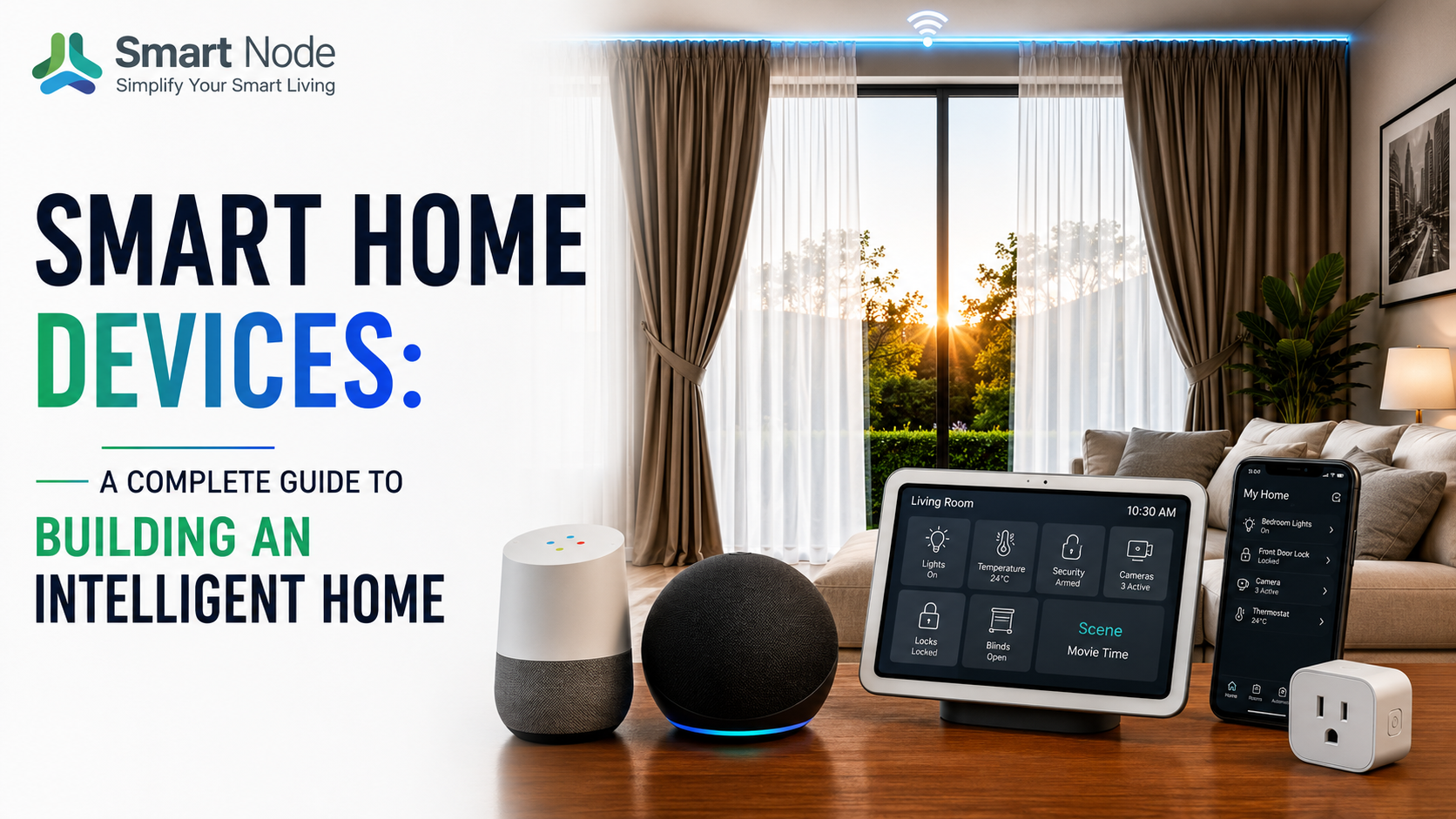
Smart Home Devices: A Complete Guide to Building an Intelligent Home
Introduction
Last summer, one of my friends shifted into a new apartment. Beautiful interiors, fresh paint, everything looked perfect. But within the first week, one small irritation started showing up again and again.
Every night before sleeping, he had to get up at least three times. Once, to switch off the hall lights. Once, to close the curtains he had forgotten earlier. And once again, because the AC temperature felt wrong.
Nothing serious. Just daily friction.
Then he installed his first set of smart home devices. Only lighting and curtain control at first. Nothing fancy.
The difference showed up in the first few days.
The lights turned off automatically at night. Curtains closed during the afternoon heat. AC started running before he reached home.
Not luxury. Just convenience.
That’s how most people enter the world of smart homes. Not because they want complicated technology, but because they want fewer small frustrations.
Smart home devices are becoming common in Indian homes for exactly this reason. They remove repetitive effort from daily routines. They bring control into your hands, even when you’re not physically present.
And once people experience that convenience, going back to manual systems feels outdated.
This guide will help you understand what smart home devices actually are, how they work in real homes, and how to choose the best smart home devices without confusion.
What Are Smart Home Devices?
Smart home devices are systems that control lighting, appliances, security, and comfort settings automatically or remotely.
Think of them as replacements for repetitive manual actions.
Instead of walking across the room to switch off the lights, you control them from your phone. Instead of remembering to close curtains every afternoon, they close automatically when the sunlight becomes harsh.
Many people assume smart home devices are complicated. In reality, most of them simplify actions that already exist in daily life.
For example:
You leave home in the morning. Earlier, you checked every room before leaving. Lights off. Fans off. Curtains closed.
With automation, one tap can do all of that.
And after a few days, it starts feeling normal.
How Smart Home Devices Work
Most smart home devices connect to a central system that controls everything through an app, keypad, or automation schedule.
Here’s a real-life example.
A family sets a routine called Good Night Mode.
When activated:
- Hall lights switch off
- Bedroom lights dim
- Curtains close
- Door locks activate
Instead of walking across rooms late at night, one command handles everything.
For families with children or elderly members, this becomes especially useful.
Less movement and less effort.
More comfort.
The Role of IoT in Home Automation
IoT sounds technical, but the concept is simple.
It allows devices to talk to each other.
For example happens during summer afternoons. Curtains close automatically when sunlight increases. This reduces indoor heat and helps the AC cool faster.
These small adjustments make homes feel smarter without demanding attention.
Wired vs. Wireless Smart Home Devices — What’s the Difference?
This decision usually depends on when you plan automation.
In newly constructed homes, wired systems are often preferred because cables can be installed easily during construction. They remain stable and reliable for years.
In older homes or apartments, wireless systems are more practical. Nobody wants to break walls just to install new wiring.
One family I know added wireless smart lighting to their 12-year-old apartment. Installation took less than a day. No major changes. No disruption.
That flexibility is why wireless systems are growing fast.
Why Smart Home Devices Are Worth the Investment
At first, smart home devices may feel like optional upgrades.
But daily usage quickly changes that perception.
Energy Savings and Lower Electricity Bills
Electricity bills usually increase because of small habits.
Lights left on. AC running longer than necessary. Curtains allow heat to enter during peak afternoon hours.
Automation helps manage these habits without reminders.
For example, scheduled curtain control can block direct sunlight during the hottest hours. That alone reduces cooling load significantly.
Over months, these small savings become noticeable.
Enhanced Home Security and Safety
Security concerns have increased in urban homes.
Whether it’s deliveries, visitors, or unexpected entries, homeowners want visibility.
Smart door and gate controllers allow monitoring even when you are outside the city.
One homeowner shared an interesting moment. While traveling, he received a notification about gate activity. It turned out to be a delivery attempt. He allowed entry remotely and completed the delivery without returning home.
That level of control changes how people feel about safety.
Convenience and Remote Control
Convenience shows up in unexpected moments.
You leave for work and suddenly wonder whether the geyser is still running.
Earlier, that meant stress.
Now, it takes one check on the phone.
That simple reassurance reduces daily anxiety.
Better Comfort Through Personalised Automation
Comfort is often invisible until it improves.
Morning lighting that slowly brightens instead of turning on suddenly feels easier on the eyes.
Evening lighting that softens after sunset makes rooms feel calmer.
These changes are subtle but noticeable.
Over time, they become part of routine living.
Types of Smart Home Devices You Should Know About
Smart homes are built step by step, not all at once.
Understanding device categories helps prioritize correctly.
Smart Lighting Devices
Lighting is usually the first step into automation.
It’s simple to understand and immediately useful.
For example, during family gatherings, lighting scenes can adjust brightness levels automatically. No need to manage switches repeatedly.
Mood changes instantly.
Smart Security Systems (Door Controllers, Gate Controllers)
Security devices control entry points.
Door automation prevents accidental unlocking. Gate automation manages vehicle movement smoothly.
These systems reduce dependence on manual supervision.
Smart HVAC Control
Climate control improves daily comfort.
Instead of waiting 10 minutes for the room to cool, AC systems can start before arrival.
Especially during peak Indian summers, this feature feels less like a luxury and more like a necessity.
Smart Curtain and Appliance Controllers
Curtains often stay ignored until sunlight becomes unbearable.
Automation fixes that.
Curtains close automatically during harsh daylight and reopen later.
Appliances such as geysers can follow fixed schedules, saving both time and electricity.
Smart Touch Panels and Keypads
Touch panels replace traditional switches.
Instead of multiple switchboards,one panel manage one device.
This reduces clutter and simplifies control.
Smart Entertainment and Audio-Video Systems
Entertainment systems connect speakers and displays across rooms.
Music can continue seamlessly as you move from room to room.
Weekend relaxation becomes smoother.
Best Smart Home Devices for Every Room
Different rooms demand different priorities.
Best Smart Home Devices for the Living Room
Lighting scenes and curtain automation work best here.
This is where guests gather, and families spend time together.
Comfort and visual appeal matter most.
Best Smart Home Devices for the Bedroom
Bedrooms benefit from soft lighting and scheduled curtain movement.
Good lighting transitions improve sleep quality naturally.
Best Smart Home Devices for the Kitchen
Kitchen automation supports safety.
Timers prevent appliances from running longer than required.
Ventilation control improves air quality.
Best Smart Home Devices for the Main Door and Entrance
Security devices are most valuable at entry points.
Controlled access ensures better monitoring of movement.
How to Choose the Best Smart Home Devices for Your Home
Choosing correctly prevents long-term issues.
Compatibility and Integration
Devices must work together.
Disconnected systems create unnecessary complications.
Ease of Installation and Use
Simple systems are used regularly.
Complicated ones remain unused.
App Control and Remote Access
Reliable apps make everyday usage smooth.
Without good control interfaces, automation loses value.
Data Security and Privacy Standards
Reliable systems protect both device activity and user information.
Security matters as much as convenience.
After-Sales Support and Warranty
Support services determine long-term reliability.
Without service support, even good devices become frustrating.
Smart Home Devices for Apartments vs. Villas — What Changes?
Every home requires different planning.
Space-Specific Automation Needs
Apartments usually focus on lighting and curtain automation.
Villas often include gate automation and outdoor lighting.
The scale changes. The basics remain similar.
Scalability of Smart Device Systems
Expandable systems allow gradual upgrades.
You don’t need everything on day one.
Growth can happen over time.
Common Mistakes to Avoid When Buying Smart Home Devices
Many buyers rush installation without planning.
Avoid:
- Choosing devices without compatibility
- Ignoring service support
- Over-automating unnecessary areas
- Selecting systems without expansion options
Smart homes should feel simple, not overwhelming.
The Future of Smart Home Devices in India
Smart homes are becoming more visible across cities.
Growing Adoption in Tier 2 and Tier 3 Cities
Demand is spreading beyond metros.
Smaller cities are adopting automation faster than expected.
Integration with Voice Assistants and AI
Voice-based commands are becoming common.
Homes are learning to respond naturally.
Smart Homes and Sustainability
Automation supports responsible energy usage.
Less waste means better efficiency.
Conclusion
Smart home devices are changing how people interact with their homes.
Not through dramatic technology, but through small daily improvements.
Lights adjust automatically. Curtains respond to sunlight. Security becomes easier to manage.
Most people begin with one device.
Then another.
Then gradually build a connected system.
Because once convenience becomes routine, manual living feels outdated.
That is the real shift happening today.
Not smarter technology.
Smarter living.
FAQs About Smart Home Devices
Are smart home devices safe to use?
Yes. Modern smart home devices are built with strong encryption and secure communication protocols that protect user data and device access.
Many smart home systems continue to function locally even without internet access. However, remote access features may require connectivity.
Yes. Wireless smart home devices are specifically designed for existing homes where rewiring may not be possible.
Costs vary based on home size and device selection. Entry-level automation can begin with a few devices, while full-home setups require larger investments.
Related Blogs
09 Oct, 2026
Blog
Smart Remote Control Systems for Home Automation
A modern living room can have a surprising number of remotes. One for…
09 Oct, 2026
Blog
Smart Power & Socket Automation Guide
A socket is easy to ignore until you start thinking about everything connected…
09 Oct, 2026
Blog
Office Automation Systems: A Practical Guide to Building Smarter Workspaces
An office usually reveals how it is managed within the first few minutes.…