Published on 10 Sep, 2026 | Updated on 13 Oct, 2026 | By SmartNode ⏱️ 10 min read
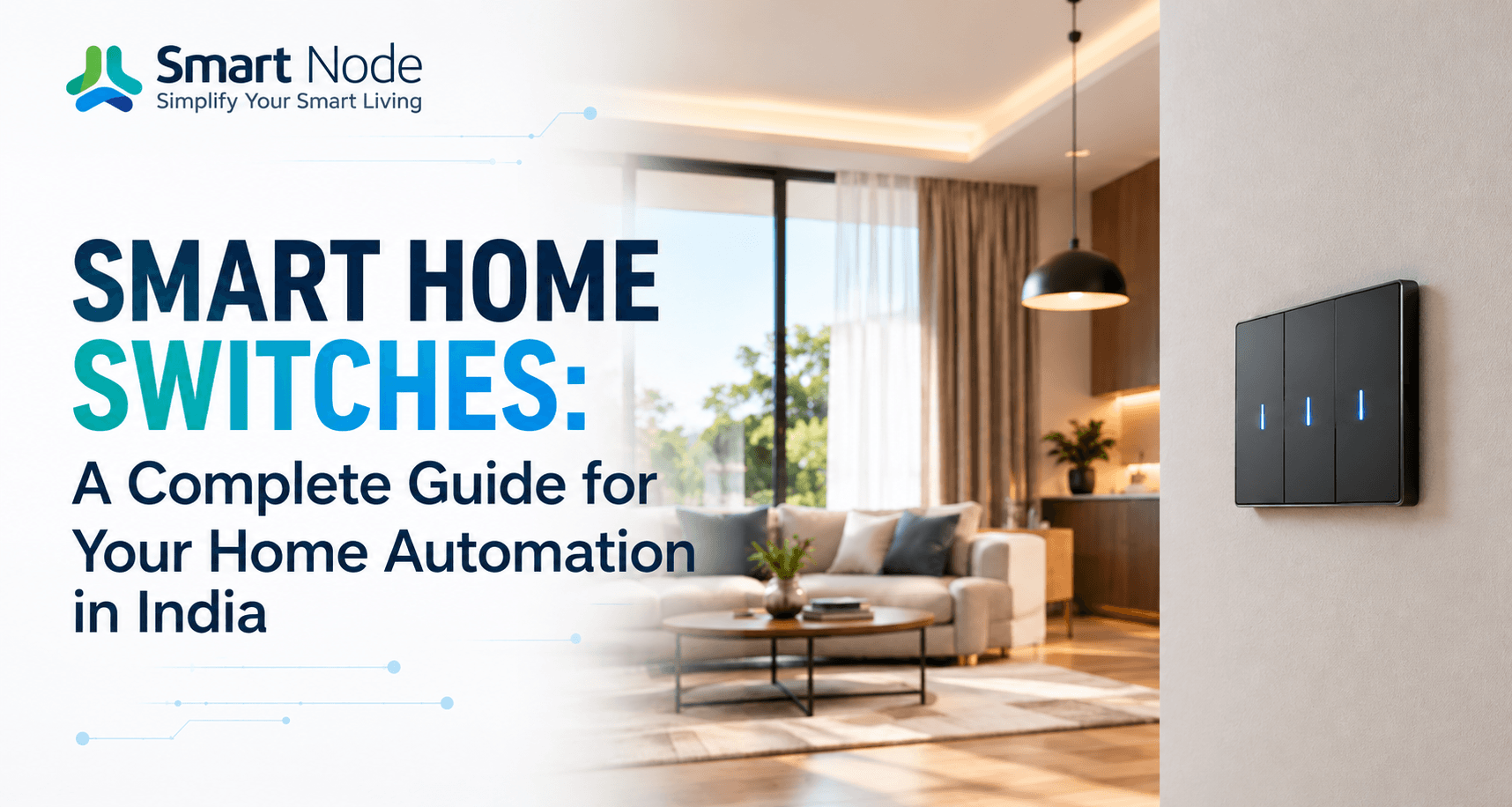
Smart Home Switches: A Complete Guide for Your Home Automation in India
If you’ve ever walked back into a room just to switch off a light, you already know why so many Indian homeowners are switching to smart home switches. They sit at the heart of any home automation setup, replacing the humble wall switch with something you can control from your phone, your voice, or a sleek touch panel. Whether you’re building a new home or upgrading an existing one, understanding how smart switches work, and how to pick the right one, makes all the difference between a gimmicky gadget and a genuinely smarter home.
In this guide, we’ll walk through what smart home switches are, how they connect to your automation system, the features that actually matter, and a step-by-step look at installing them in Indian homes.
What are smart home switches and how do they work?
A smart home switch is an internet or Wi-Fi-enabled switch that lets you turn appliances, lights, and fans on or off remotely, instead of relying only on a manual flip. Unlike a regular switch, it connects to your home network and communicates with an app, a touch panel, or a voice assistant, giving you control over your home from anywhere.
Most smart switches use a small backend device fitted behind your existing switchboard. This device receives commands over Wi-Fi and controls the electrical load connected to it, such as your lights, fans, or plug points. Some systems also offer a non-Wi-Fi “remote device” option for homes that only need local switch or remote-based control without app connectivity.
How smart switches connect to your home automation system?
Smart switches typically connect to your home Wi-Fi router, which allows the companion app to send commands to the device. Once connected, the switch can be:
- Operated manually through a mechanical or touch panel
- Controlled remotely through a mobile app
- Linked to voice assistants like Alexa or Google Home
- Grouped into “scenes” that trigger multiple switches at once, such as a “Good Night” scene that turns off all lights and locks the door
A well-designed home automation system should also work smoothly on your local network even when the internet connection drops, since Wi-Fi and internet access aren’t the same thing. As long as your router is powered on, you should still be able to control your home from within range, even during an outage.
Smart switch vs. regular switch: what’s the difference?
A regular switch only performs one function: opening or closing a circuit manually. A smart switch does everything a regular switch does, plus:
- Remote control through a smartphone app
- Scheduling and automation
- Voice control compatibility
- Usage history and energy insights
- Integration with other smart devices like curtains, locks, and ACs
In short, a regular switch is a single-purpose tool, while a smart switch for home India setups becomes a connected hub for your entire living space.
Key features of smart home switches for home automation
Not all smart switches are built the same, so it helps to know which features genuinely improve daily convenience before you invest.
Touch control and gesture-based switching
Most modern smart switches replace traditional toggle switches with a touch panel that responds to a light tap. Premium panels also support smooth, flicker-free dimming, so lighting transitions gradually instead of jumping between brightness levels, a small detail that makes a noticeable difference in how a room feels in the evening.
Remote access and smartphone app control
With app-based control, you can turn appliances on or off from anywhere with an internet connection, whether you’re at the office and forgot to switch off the geyser, or on vacation and want to check that the lights are off at home. Many apps also let you view a history of switch activity, so you always know when a device was last used.
Voice control via Alexa, Google Home, and Siri
Voice compatibility with Alexa, Google Home, and similar assistants means you can control your lights, fans, and appliances hands-free. Just say “turn on the living room lights,” and the connected touch panel switch responds instantly, keeping the app, the physical panel, and the voice assistant perfectly in sync.
Benefits of installing smart switches in your Indian home
Beyond convenience, smart switches solve real, everyday problems that Indian households deal with, from high electricity bills to safety around children and staff.
Energy savings and lower electricity bills
Smart switches help cut down on wasted electricity by letting you schedule devices, set auto-off timers, and monitor usage patterns. According to Grand View Research, India’s smart home market, valued at roughly USD 6.4 billion in 2024, is projected to grow at a CAGR of over 31% through 2030, driven partly by rising demand for energy-efficient, connected living solutions.
Practical examples include:
- Auto-off timers for geysers, so you never leave one running by mistake
- Scheduled lighting that switches off automatically during daylight hours
- Sunrise/sunset-based automation for outdoor and garden lights, so you’re never paying for lights that stay on longer than needed
Enhanced safety with child lock and overload protection
Smart switches also add a layer of safety that regular switches simply can’t. A child lock feature lets you disable a switch from the app, preventing kids from operating appliances like the AC or a heater unsupervised. Combined with overload protection and shock-proof, low-voltage touch operation, smart panels are considerably safer around children and household staff than standard mechanical switches.
You can also use sub-user access to give guests, tenants, or domestic help limited and time-bound control over specific switches only, useful if you have Airbnb guests or a maid who only needs access to the kitchen.
How to choose the right smart switch for your home in India
With dozens of brands and configurations available, choosing the right smart switch comes down to matching the device to your switchboard, your load requirements, and your home’s aesthetic.
Keep these factors in mind:
- Load compatibility: Check whether the switch supports fans, dimmable lights, and high-load appliances like geysers or ACs.
- Wiring requirements: Some smart switches need a neutral wire; others are designed to work without one, which matters a lot for older Indian homes.
- App reliability and local control: Choose a system that continues working over your home Wi-Fi even without an active internet connection.
- Design and finish: Touch panels are now available in acrylic, wood, glass, and even marble finishes, so you don’t have to compromise on interior design for automation.
- Warranty and after-sales support: Look for a strong warranty period and reliable local support, since smart devices need occasional servicing.
Single-gang vs. multi-gang smart switch panels
A single-gang panel controls one switch or load, while multi-gang panels combine multiple switches, for fans, lights, and sockets, on a single touch panel. Indian homes typically use 2-module, 4-module, 6-module, or 8-module gang boxes, and most smart switch panels are designed to fit these standard sizes without any structural changes. Larger rooms with multiple appliances usually benefit from multi-gang panels, since they consolidate controls into one clean interface instead of several separate switches.
How to install smart home switches in India: a step-by-step guide
Installing smart switches in an Indian home generally follows this process:
- Assess your switchboard: Identify how many loads (lights, fans, sockets) each switchboard controls and note the gang box size.
- Choose compatible backend devices: Select a smart device model that matches your load count and type, for example, a mix of fan, dimmable, and normal loads.
- Install the backend device: A technician fits the smart module behind your existing switchboard, connecting it to the existing wiring.
- Fit the touch panel: The touch panel or keypad is mounted over the switchboard, replacing the mechanical switch faceplate.
- Connect to Wi-Fi and set up the app: Pair the device with your home network and configure switches, scenes, and schedules in the companion app.
- Test two-way and voice control: Verify that switches respond correctly from the touch panel, app, and any linked voice assistant.
Can you replace existing switches without rewiring?
Yes, this is one of the biggest advantages of retrofitting smart switches. Instead of tearing down walls or laying fresh wiring, most systems are designed to fit directly into your existing switchboard and gang box, using the same wiring layout you already have. This makes it possible to upgrade an older home to a fully connected one in a matter of hours rather than days, and it’s a major reason retrofit home automation switches have become so popular in India’s resale and rental housing market.
Professional installation vs. DIY for Indian homes
While some basic smart plugs can be self-installed, most smart switch panels involve working with live electrical wiring behind the switchboard and are best left to a trained installer. Professional installation ensures:
- Correct load mapping for fans, dimmers, and high-capacity appliances
- Safe handling of neutral and phase wiring
- Proper configuration of two-way or three-way switching, where a single backend device can be operated from multiple touch panels in the same room
- Warranty validity, since many manufacturers require certified installation
For most Indian households, professional installation is the safer and more reliable route, especially in older buildings with non-standard wiring.
Final Thoughts
Smart home switches have moved well past being a novelty. They’re now a practical way to save energy, add safety, and simplify daily life in Indian homes. From touch-based dimming and voice control to retrofit installation that skips the rewiring hassle, today’s home automation switches make it easier than ever to upgrade an existing home into a genuinely smart one.
If you’re ready to explore smart switch options tailored to your home’s wiring and design, explore our smart touch panel range or get in touch with our home automation experts to plan your installation.
Frequently Asked Questions
1. Can I install smart switches in a residential flat in India?
Yes. Smart switches are designed to retrofit into standard Indian switchboards, so they work in flats, independent homes, and villas alike. Since most systems don’t require rewiring or structural changes, they’re well suited to rented flats and resale apartments too, as long as the housing society allows minor electrical modifications.
2. Do smart switches work without a neutral wire in Indian homes?
Some smart switches require a neutral wire at the switchboard to power the Wi-Fi module continuously, while others are engineered to work without one. Since many older Indian homes weren’t wired with a neutral connection at every switch point, it’s important to confirm compatibility with your electrician or installer before purchasing.
3. What is the price of a smart home switch in India?
Prices vary widely based on the number of loads, panel material, and brand, ranging from a few thousand rupees for a basic single or two-module switch to significantly more for premium multi-gang panels in wood, glass, or metal finishes with added features like dimming and voice control. It’s best to request a custom quote based on your switchboard configuration and load requirements.
4. Do smart home switches work during a power cut in India?
Smart switches, like any electrical device, need power to operate, so they won’t function during a complete power outage unless your home is on inverter or generator backup. However, quality systems are designed to be compatible with inverter power, meaning your connected lights and appliances continue working smoothly once backup power kicks in.
Related Blogs
17 Oct, 2026
Blog
Upgrade Your Home This Diwali with Smart Home Devices
Diwali changes the way a home is used. The living room stays active…
16 Oct, 2026
Blog
Smart Door Lock & Security Systems Guide
A door lock has one job: control who gets through the door. For…
15 Oct, 2026
Blog
Complete Guide About RGBW Controllers: Types & Features
Colour-changing lighting can completely alter the character of a space. The same room…