Published on 09 Oct, 2026 | Updated on 09 Oct, 2026 | By SmartNode ⏱️ 9 min read
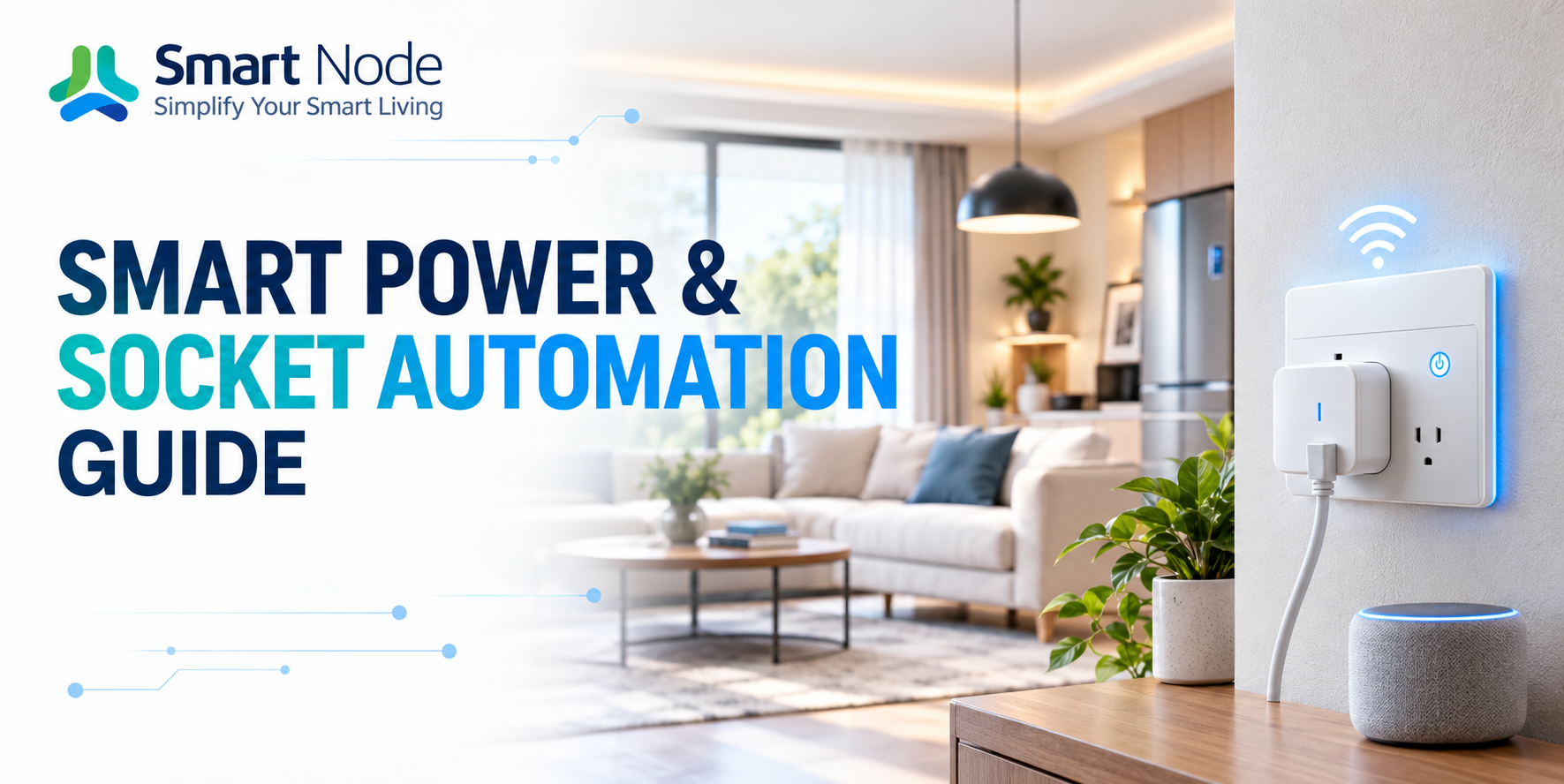
Smart Power & Socket Automation Guide
A socket is easy to ignore until you start thinking about everything connected to it. Lamps, televisions, coffee machines, chargers and appliances all depend on electrical outlets, yet a conventional socket has no idea what is connected to it. It simply supplies power when switched on.
A smart power plug adds a control layer between the outlet and the appliance. It can allow a device to be switched remotely, scheduled or included in a wider automation setup. For homes and offices, this creates a simple way to automate selected appliances without changing the entire electrical system.
The real value isn’t simply turning a socket on from your phone. It is deciding when a device should operate and how it should work alongside the rest of the space.
What Is Smart Power & Socket Automation?
Smart power and socket automation uses connected devices to control the electrical supply to appliances and equipment.
A conventional socket relies on a physical switch. Smart sockets add digital control, allowing connected loads to be operated through an application, schedule, automation scene or compatible control interface.
A smart power plug works in a plug-in format. It sits between an existing wall outlet and the appliance, making it useful when you want automation without modifying the socket itself. For example, a table lamp can be connected through a smart plug and scheduled to turn on in the evening. Selected office equipment could follow working-hour schedules instead of remaining powered continuously.
Smart socket automation is therefore less about making the appliance itself intelligent and more about giving users control over when power is supplied to it.
How Smart Sockets Differ from Smart Switches
The simplest distinction is what they control. A smart switch is generally installed into a fixed electrical circuit and is commonly used for lighting or other permanently wired loads. A smart socket controls power delivered through an outlet.
If you want to automate a plug-connected lamp, appliance or piece of equipment, a smart socket or smart power plug is usually the more natural choice.
Key Components: Smart Plugs, Smart Sockets, and Power Modules
There are three common approaches:
- Smart plugs: Plug-and-play devices that sit between the outlet and appliance.
- Smart sockets: Integrate control into the electrical outlet itself, creating a cleaner permanent installation.
- Power modules: Can bring suitable existing circuits into an automation system without necessarily replacing the complete electrical infrastructure.
The right choice depends on whether the project is temporary, retrofit-based or part of a new electrical installation.
How Smart Socket Automation Works?
The basic process is straightforward: a command reaches the smart socket or plug, and the device switches the connected load accordingly. The command could come from an app, schedule, voice interface, physical control or another automation rule.
For example, a smart power plug connected to a lamp could be scheduled to turn on at a particular time. The same device could also be included in an Away Scene, allowing selected loads to switch off when the property is left. The communication technology behind the device varies.
Wi-Fi vs. Zigbee vs. Bluetooth-Based Smart Sockets
Wi-Fi smart sockets communicate through a wireless network and are common in retrofit applications.
Zigbee devices generally operate through a hub or coordinator and are designed for low-power connected-device networks.
Bluetooth is useful for short-range communication and device setup, depending on the product.
There isn’t one universally correct technology. The decision should consider the number of devices, network architecture, range, control requirements and whether the sockets need to become part of a larger automation ecosystem.
Retrofit Smart Sockets vs. Plug-In Smart Plugs
A smart power plug is generally the simpler option. It can be connected to an existing outlet without replacing the socket, making it useful for individual appliances, rented spaces or situations where electrical modifications aren’t desirable.
An in-wall smart socket or power module provides a more integrated installation and can be preferable when automation is being introduced as part of a permanent renovation or retrofit.
App, Voice, and Schedule-Based Control
Once connected, smart sockets can provide several control options. An application can provide remote switching. Schedules can automate repetitive tasks. Voice control can provide another interface where supported.
Smart sockets can also become part of scenes. A single command might switch off selected appliances while activating other connected functions. The benefit comes from bringing these actions into a common automation environment rather than managing every device independently.
Types of Smart Power & Socket Devices
Different devices make sense in different situations.
Smart Plugs (Plug-and-Play)
The smart power plug is the easiest way to introduce socket automation. It requires no replacement of the existing outlet and can usually be moved from one location to another. Typical applications include lamps, entertainment equipment, chargers and other compatible loads.
In-Wall Smart Sockets
An in-wall smart socket integrates automation directly into the electrical point. This creates a cleaner appearance and can make sense for permanent installations where socket automation is part of the overall electrical design. Installation should be performed according to the product and electrical requirements.
Smart Power Strips and Multi-Outlet Modules
Multi-outlet devices can provide control over several connected loads. They can be useful around workstations, entertainment units or equipment areas where multiple devices are grouped together. The total electrical load still needs to remain within the device’s specified rating.
Smart Sockets vs. Smart Switches: Which Do You Need?
The choice depends on the load being controlled:
- For a plug-connected appliance, a smart socket or smart power plug is generally appropriate.
- For a fixed electrical circuit, a smart switch or suitable power-control module may be more appropriate.
There is also no requirement to choose only one approach. A home or office can use smart switches for lighting and smart sockets for selected appliances, with both integrated into the same automation ecosystem where supported.
The important consideration is matching the control device to the electrical load and installation rather than choosing hardware based purely on appearance or features.
Safety Features to Look for in Smart Power Devices
Smart connectivity does not automatically make an electrical device safe. The device must be appropriately rated for the load it controls and installed correctly.
Overload and Short-Circuit Protection
Protection against excessive current and electrical faults is important, but it does not mean a device can handle any appliance. Always check the manufacturer’s current and load ratings.
Surge Protection
Where surge protection is required, verify that the product actually provides it and understand its rated protection level. A smart plug should not automatically be considered a replacement for dedicated electrical surge protection.
Child-Lock and Tamper Alerts
Child-safety features can be useful in homes where young children have access to electrical outlets. Some connected systems may also provide status notifications or alerts.
Safety should always begin with appropriate hardware, electrical protection and installation.
How to Set Up Smart Power Automation Without Rewiring?
This is one of the biggest advantages of plug-in automation. A smart power plug can be connected to an existing wall outlet, with the appliance then connected through the smart device. No modification to the appliance or wall wiring is necessarily required.
For a more permanent solution, compatible in-wall smart sockets or retrofit power modules can provide integrated control. This makes socket automation suitable for different situations:
- Rental property: Plug-in smart devices.
- Existing home or office: Retrofit modules or smart sockets.
- New construction: Integrated socket automation planned alongside the electrical design.
The approach can therefore be selected according to the property rather than forcing every project into the same installation method.
Integrating Smart Sockets with Other Smart Devices
A smart socket becomes more useful when it works as part of a larger automation system:
- An Away Scene could switch off selected non-essential appliances when everyone leaves.
- A night-time scene could turn off entertainment equipment while leaving essential devices powered.
- In an office, selected equipment could follow predefined working-hour schedules.
This turns a smart power plug from a remotely controlled outlet into one component of a broader automation setup. The goal is not to make users control more things. It is to make them control fewer things manually.
Frequently Asked Questions
1. Is smart socket automation expensive to install?
The cost depends on the type and number of devices. Plug-in smart power plugs are generally simpler to introduce, while permanent in-wall installations may involve additional electrical work and automation infrastructure.
2. Can smart sockets handle high-power appliances like ACs and geysers?
Not every smart socket is suitable for high-power appliances. ACs and geysers can have substantial electrical loads, so the device must be specifically rated for the application and installed with appropriate protection.
3. Do smart sockets work without rewiring?
Yes. Plug-in smart power plugs can automate suitable appliances without changing the existing wiring. Retrofit in-wall solutions can also reduce the need for major electrical modifications, depending on the installation.
4. Can smart sockets help reduce electricity bills?
They can reduce unnecessary operation by allowing suitable appliances to be scheduled or switched off automatically. Actual savings depend on the appliance, operating pattern and automation configuration.
5. Are smart sockets safe for daily heavy-load use?
Only when the device is specifically rated for the intended load and correctly installed. Heavy-load applications require careful attention to current rating, appliance characteristics and electrical protection.
Related Blogs
09 Oct, 2026
Blog
Smart Remote Control Systems for Home Automation
A modern living room can have a surprising number of remotes. One for…
09 Oct, 2026
Blog
Office Automation Systems: A Practical Guide to Building Smarter Workspaces
An office usually reveals how it is managed within the first few minutes.…
09 Oct, 2026
Blog
Lighting Control Systems: Types, Benefits & Applications
Lighting is usually planned room by room. A switch is placed near the…